
Careers
Cooling tower work is a genuine trade, and almost nobody arrives already knowing it. If you have industrial field experience and you are willing to learn a specialty, we are worth talking to.
What a field technician actually does
A cooling tower is a large wet structure full of mechanical equipment, and our crews take them apart and put them back together, usually while the plant around them keeps running.
On a given job you might be replacing structural timber inside a basin, pulling a gear reducer, setting fill and drift eliminators, rigging a fan assembly out of a stack, installing FRP grating and handrail, or working through a distribution basin replacing nozzles. The same week might include a written condition inspection and a performance test.
The reality of it
- It is wet. Cooling towers are wet by design, and much of the work happens inside them.
- It is at height. Fan decks, stacks and upper structure. Full-body harness and tie-off, every time.
- It is confined-space work. Plenums, basins and fill areas, with proper permits and monitoring.
- It is outdoors, on the Gulf Coast. Which means summer heat that has to be managed seriously, and occasional freeze work that is the opposite problem.
- It is physical. Lifting, rigging, working in awkward positions, long days during an outage.
- It travels. Most work is within driving distance of Baytown across the Gulf Coast, and some jobs mean nights away.
Outage and turnaround work sets the rhythm. When a plant opens a window, the work is intense and the hours are long, because that window is the only chance to do it. Between windows the pace is more ordinary.
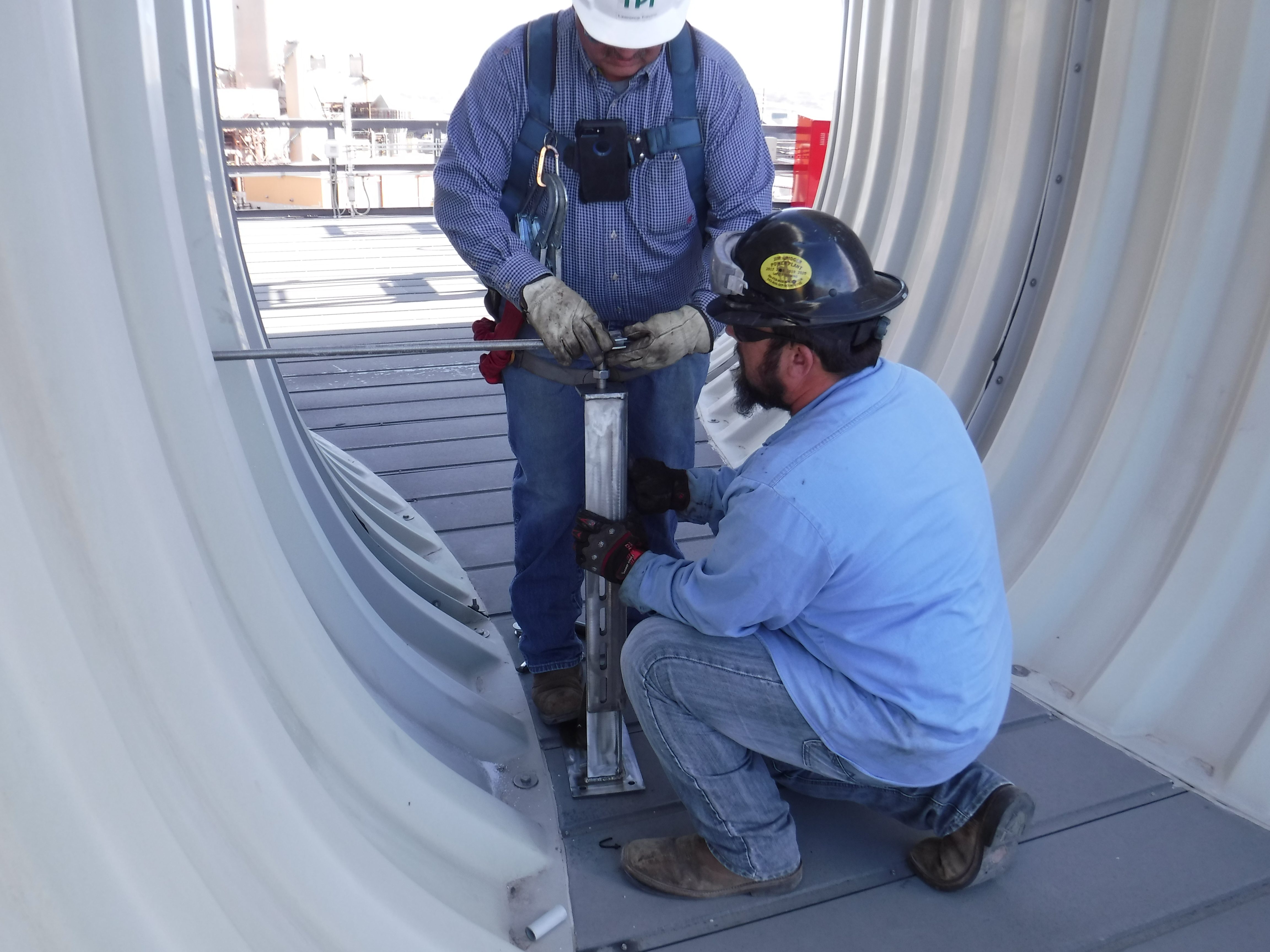
Installing a support strut inside a fan cylinder. Hard hats, glasses and harnesses, because that is the standard.
It is a real specialty. After a few years you will know things about cooling towers that most mechanical contractors never learn, and that knowledge is portable, scarce and in demand.
Experience that transfers directly
Very few people have cooling tower experience, so we do not expect it. We do expect that you have worked in an industrial environment and know how to keep yourself safe in one.
Trades that map well
- Millwright: alignment, couplings, gearboxes, rotating equipment
- Industrial mechanic: bearings, seals, drives, vibration
- Structural carpentry: timber towers are framed and thru-bolted
- Rigging and crane signaling: fans, gearboxes and structure all get flown
- Ironworker / structural steel: framing, walkways, handrail, grating
- Boilermaker: confined space, at height, in a plant environment
- Pipefitter: distribution systems, headers, laterals, valves
- FRP and composites: casing, grating, structural shapes
What matters more than a résumé
- You take safety seriously without being told to
- You turn up, on time, including during an outage
- You can work in a plant without creating a problem for the client
- You are willing to be taught a specialty properly
- You can lift, climb and work in heat
- You hold a valid driver's license
- You can pass site access requirements, including drug and alcohol screening and background checks
Still apply. Helper and entry-level field positions are how most people enter this trade, and being genuinely willing to learn matters more to us than a list of certifications you have not had the chance to earn yet.
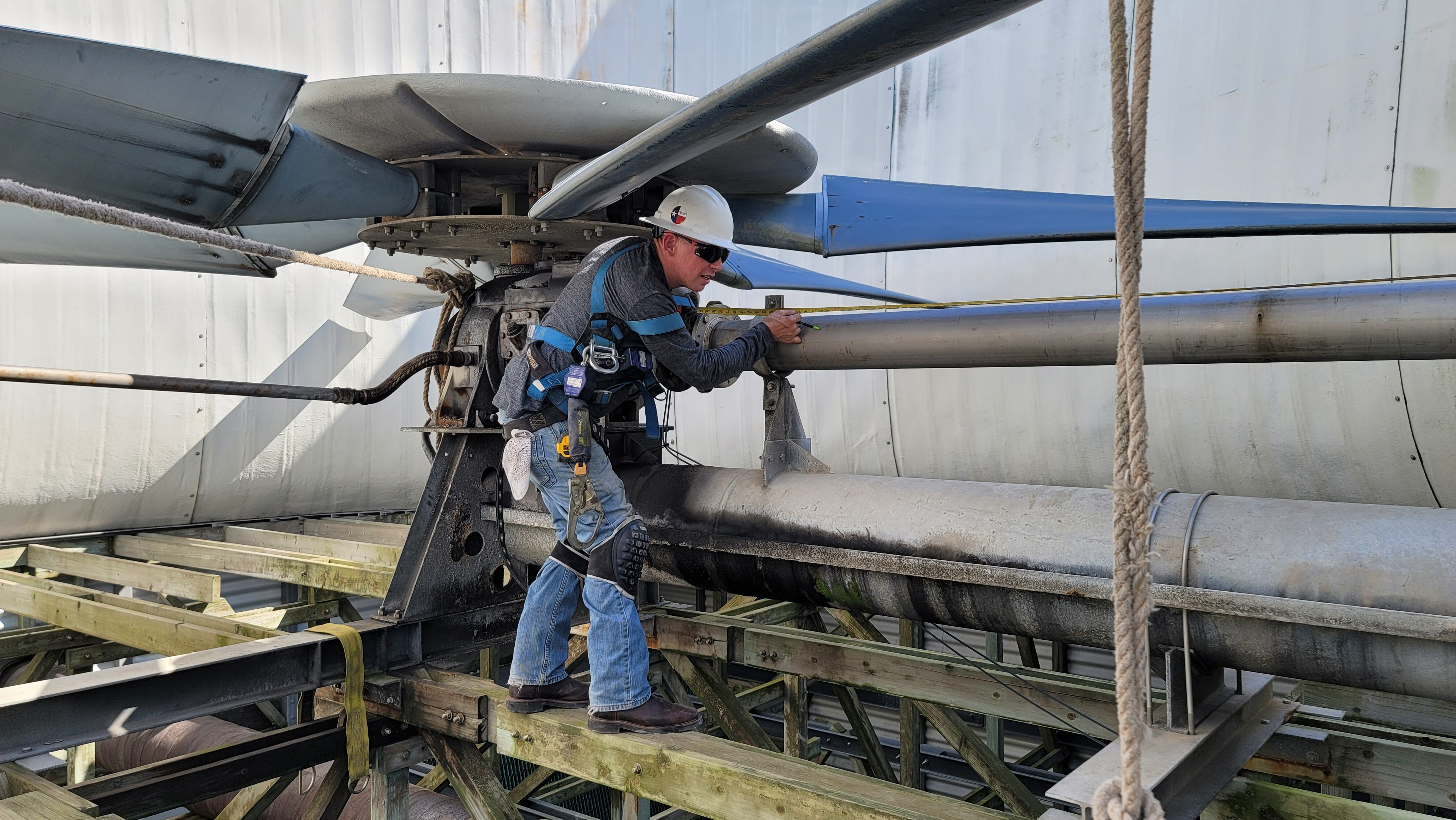
Hard hat, safety glasses, full-body harness, tied off. On a fan deck that is not optional.
Non-negotiable, and we mean it literally
We work inside our clients' plants. Their safety requirements apply to us in full, and ours apply on top. Nobody on our crews is asked to choose between finishing a job and going home intact.
What you can expect from us
- PPE provided and required: hard hat, safety glasses, gloves, appropriate footwear, full-body harness
- Fall protection on every elevated work surface
- Proper confined-space entry procedures, permits and gas monitoring
- Lockout/tagout on every fan drive before anyone goes near it
- Heat stress management on Gulf Coast summer work
- Site-specific orientation before you start on any plant
What we expect from you
That you use it. Every serious cooling tower injury we know of came from a shortcut on a job that was nearly finished: an untied lanyard, a fan that was not locked out, a walkway grating panel that was not secured. Stopping work because something is not right is always the correct decision here, and you will never be criticized for it.
How to apply
We accept general applications continuously rather than posting individual vacancies, because hiring here follows the workload, and the workload follows outage season and storm season.
The application form is hosted on our applicant system. It takes a few minutes and asks for your contact details, your work history and your relevant experience.
Call (713) 643-0691 or email sales@towerperformance.com. If the online form does not work for you for any reason, that is not a barrier; get in touch and we will take your details another way.
Tower Performance LLC · 3811 Cedar Blvd Ste A, Baytown, TX 77523. Applicants must be legally authorized to work in the United States.